On-Grid vs Off-Grid vs Hybrid Solar Power for Businesses

| By | Suryanesia Team |
| On | 14 Jan 2026 |
On-Grid vs Off-Grid vs Hybrid Solar Power for Businesses in Indonesia
For many businesses in Indonesia, electricity is more than a basic utility. It is one of the largest operating costs and plays a key role in daily operations. As energy prices rise and power reliability becomes more important, more companies are turning to solar energy as a long term solution. Installing solar systems, often called Solar Power Plants in Indonesia, is no longer only about sustainability. It is also about cost control and risk reduction.
At the early stage of decision making, many businesses face a simple but important question. Which type of solar power system is right for their operations. With choices such as On Grid, Off Grid, and Hybrid solar systems, the decision can feel confusing. This is especially true for companies that do not manage energy systems on a daily basis.
In Indonesia, these three types of solar systems are the most commonly used. Even so, many businesses still make decisions based on market trends or recommendations from peers. Without understanding how each system works in real operating conditions, this approach can lead to inefficient investments. In some cases, the wrong choice can also create new operational risks or power reliability issues.
Each solar system is designed to serve a different purpose. Some focus on reducing electricity bills, while others prioritize energy independence or power stability. The right option depends on several factors. These include how much your business depends on the national electricity provider PLN, how critical uninterrupted power is to operations, and whether your facility is ready to manage backup power or energy storage.
This article explains the differences between On Grid, Off Grid, and Hybrid solar systems from a practical business perspective. It focuses on real conditions in the Indonesian market. Instead of technical language, it highlights what matters most to business decision makers. This includes electricity cost efficiency, operational reliability, and long term energy planning. The goal is to help you choose a solar energy system that supports your business today and into the future.
Brief Summary of On Grid, Off Grid, and Hybrid Solar Systems
On Grid Off Grid and Hybrid solar systems differ in how they connect to the national electricity network PLN, whether they use battery storage, and how they support daily business operations. These differences matter because the system you choose will affect electricity costs, power reliability, and how easy the system is to manage.
On Grid Solar System
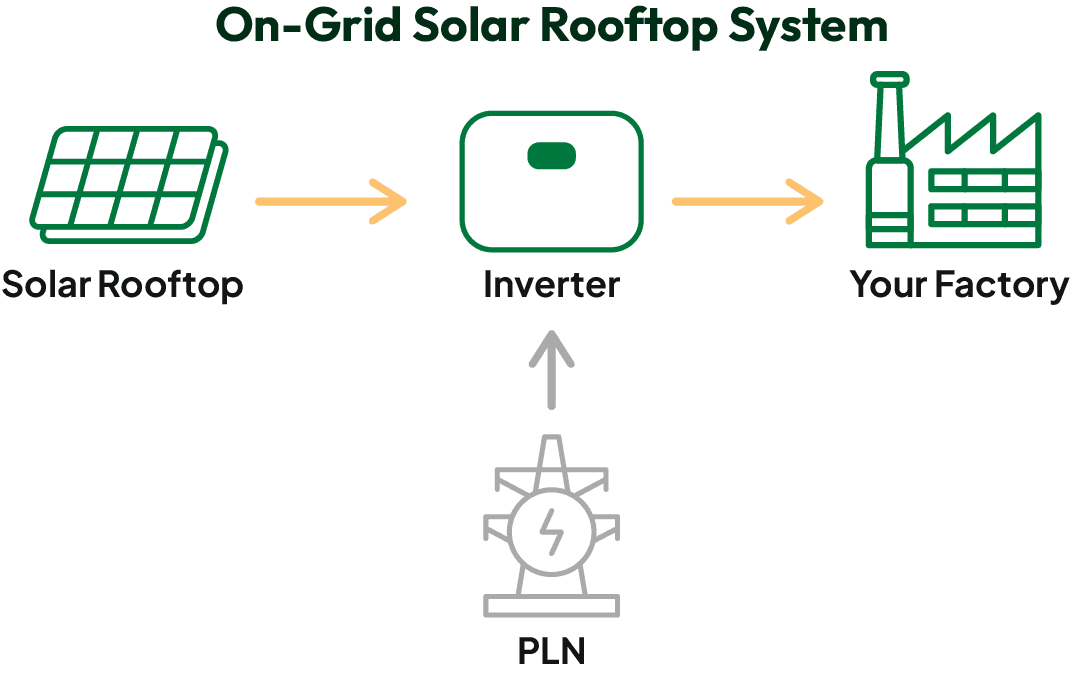
On Grid solar system connects directly to the PLN electricity network and operates without batteries.
During the day, the system uses solar energy to support business operations.
When solar production is not enough, the system automatically draws electricity from PLN.
This approach focuses on reducing electricity costs while keeping the system simple.
Because there are no batteries, the system is easier to operate and maintain.
For this reason, many businesses choose On Grid systems as their first step into solar energy.
Off Grid Solar System
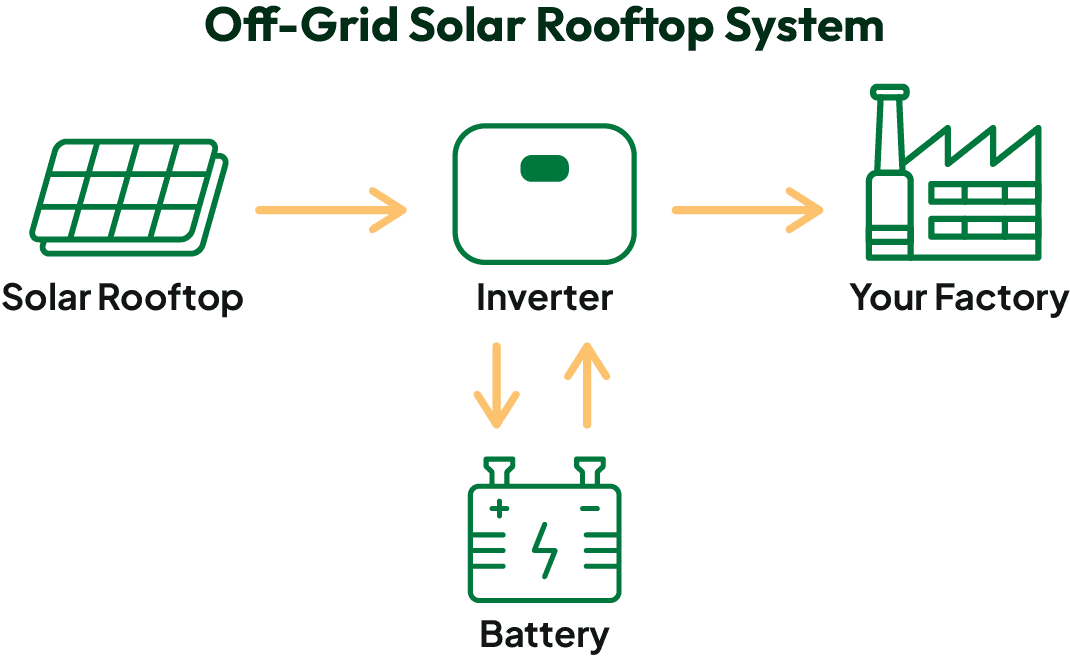
An Off Grid solar system works independently and does not connect to PLN.
Relies fully on batteries to store electricity produced by solar panels.
The stored energy supplies power during both daytime and nighttime operations.
Businesses usually use this system in locations where PLN electricity is not available or is unreliable.
Common examples include remote industrial sites, plantations, and isolated facilities that cannot depend on the national grid.
Hybrid Solar System
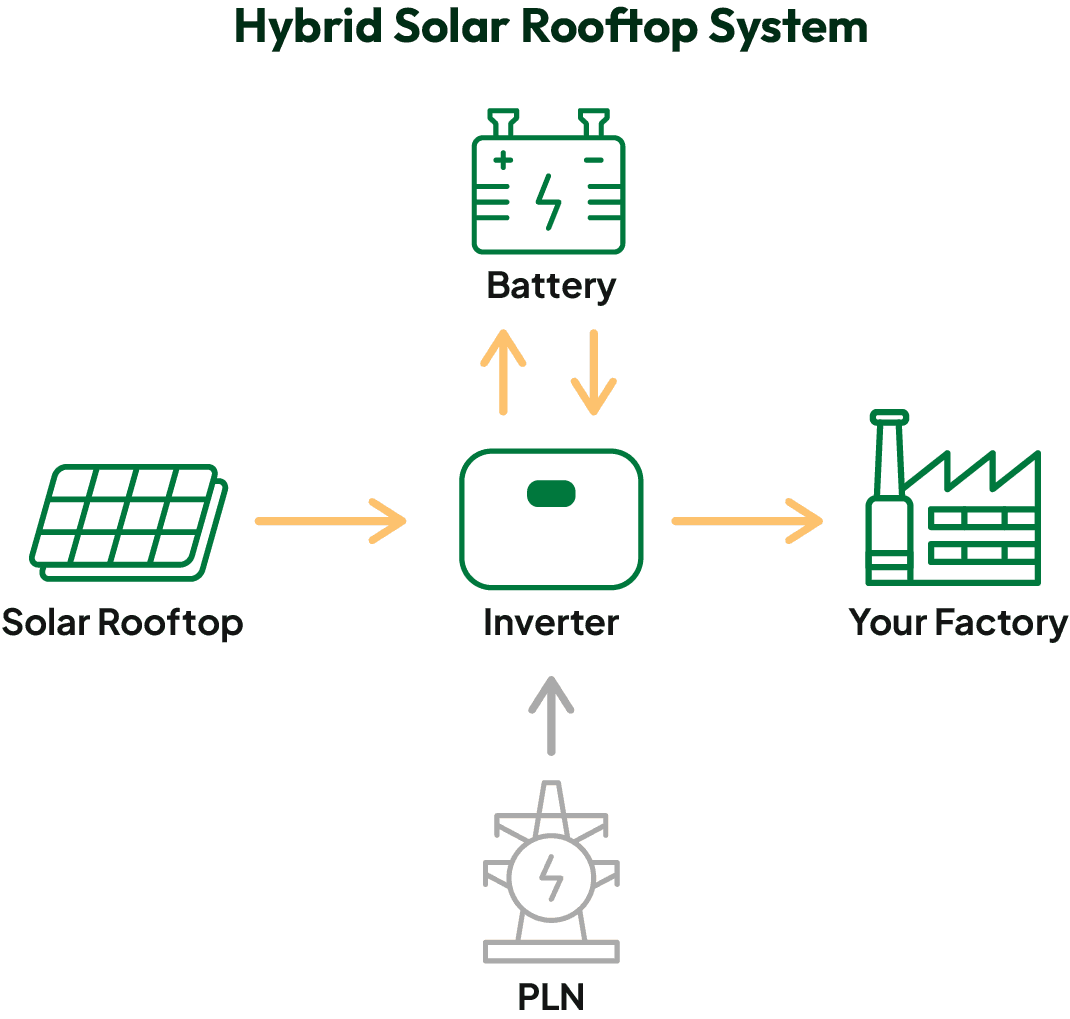
A Hybrid solar system combines solar panels, the PLN electricity network, and battery storage in one system.
Solar energy is used first when available.
Excess energy is stored in batteries.
When needed, the system can also draw electricity from PLN.
This setup helps maintain power continuity during grid interruptions or when solar production alone cannot meet demand.
Offers a balance between cost savings and power reliability.
Which System Is Most Common
For most businesses in Indonesia with stable access to PLN electricity, On Grid solar systems are the most cost efficient and easiest to operate. Off Grid and Hybrid systems are usually selected for specific situations.
These include locations without grid access or operations that require higher levels of energy independence or backup power.
What Is an On Grid Solar Power System
An On Grid solar power system is a solar electricity system that connects directly to the national electricity grid managed by PLN. Businesses in urban areas across Indonesia use this system most often. Its main goal is to reduce electricity use from PLN and lower monthly operating costs without adding complexity to daily operations.
Many businesses choose this system because it supports cost savings while still relying on the stability of the existing electricity grid. It offers a practical solution for companies that want to adopt solar energy without changing how they manage power.
Who Should Use an On Grid Solar System
On Grid solar systems suit businesses that want to control energy expenses and keep operations simple. Companies that operate during normal business hours benefit the most because solar energy is available when electricity demand is highest. This makes the system a good fit for offices, factories, warehouses, and commercial buildings in areas with reliable grid access.
How an On Grid Solar Power System Works
Solar panels generate electricity during daylight hours when sunlight is strongest. The system uses this electricity right away to support daily business activities. These activities include running machinery, cooling systems, lighting, and office equipment.
When solar energy cannot meet demand, the system automatically draws electricity from the PLN grid. Because the system does not use batteries, electricity flows smoothly between solar panels and the grid. There is no need for complex energy storage management. This keeps the system stable and easy to operate.
Advantages of On Grid Solar Systems for Businesses
One major advantage of an On Grid solar system is the lower initial investment. Since batteries are not needed, capital costs remain more affordable. This makes the system a popular starting point for businesses that want to invest in solar energy.
Another benefit is reduced monthly electricity bills. Businesses can use solar energy during operating hours and lower their dependence on PLN electricity. From an operational view, these systems are simple to manage and require less maintenance. They also integrate easily with existing electrical infrastructure.
Limitations of On Grid Solar Systems
Despite their cost efficiency, On Grid solar systems have limits. When a power outage occurs on the PLN grid, the solar system also stops supplying electricity. This shutdown is a safety requirement to protect grid infrastructure and maintenance personnel.
Because of this limitation, businesses that need uninterrupted power may find this system insufficient on its own. Operations that rely on continuous electricity may need additional backup solutions or a different type of solar system.
What Is an Off Grid Solar Power System
An Off Grid solar power system is a solar electricity system that operates independently and is not connected to the national electricity network managed by PLN. This system is designed to supply all required electricity directly from solar energy, making it a practical option for business locations that do not have access to the main power grid.
Off Grid solar systems are most commonly used in remote areas or at specialized business sites where grid electricity is either unavailable or unreliable. For these locations, Off Grid systems provide a self sufficient energy solution that enables operations to continue without dependence on external electricity infrastructure.
How an Off Grid Solar Power System Works
In an Off Grid solar system, solar panels generate electricity that is stored in batteries. The energy stored in these batteries becomes the main source of power for business operations during both daytime and nighttime hours.
Because the system operates independently from the PLN grid, all electricity demand must be met by the combination of solar panels and battery storage. This makes proper system design and capacity planning essential.
Panel size, battery capacity, and daily energy consumption must be carefully matched to ensure that electricity remains available in line with operational requirements.
Advantages of Off Grid Solar Systems
The most significant advantage of an Off Grid solar system is full energy independence. Businesses can operate without relying on PLN electricity, which is especially valuable in remote locations, temporary project sites, or facilities outside the reach of the national power grid.
In certain situations, Off Grid systems are not just an alternative but the only practical way to achieve a stable and reliable electricity supply. For businesses operating in these environments, Off Grid solar power enables continuity and supports essential operations.
Limitations of Off Grid Solar Systems for Businesses
Despite their independence, Off Grid solar systems typically require a higher initial investment. Batteries serve as the main power source, which increases capital costs. Over time, batteries also require maintenance and eventual replacement, contributing to higher long term operating expenses.
For businesses located in areas with a stable PLN electricity supply, Off Grid systems are generally less cost efficient. In many cases, energy needs can be met more effectively using simpler solar system configurations that involve lower investment and easier management.
What Is a Hybrid Solar Power System
A Hybrid solar power system is a solar electricity solution that combines solar panels, the national electricity grid managed by PLN, and battery storage in one system. This setup improves power reliability and helps businesses maintain operations when electricity supply becomes unstable.
Businesses often consider Hybrid solar systems when power continuity is essential to daily operations. These systems support companies that cannot afford unexpected downtime or service interruptions.
How a Hybrid Solar Power System Works
In a Hybrid solar system, solar panels act as the main source of electricity during the day. The system uses this electricity directly to support business activities. When production exceeds demand, the system stores excess energy in batteries.
If solar production drops or the PLN grid experiences a disruption, the system automatically supplies electricity from battery storage or other backup sources such as generators. This automatic response helps keep operations running smoothly and maintains a stable power supply under changing conditions.
Advantages of Hybrid Solar Systems
The key advantage of a Hybrid solar system is its ability to provide continuous electricity. By reducing dependence on the PLN grid, businesses also reduce the need to rely on costly backup options such as diesel generators.
This system is especially valuable for businesses that are sensitive to power disruptions. These include manufacturing facilities, cold storage operations, and digital based services. Higher power reliability helps protect equipment, preserve products, and maintain consistent service quality.
Limitations of Hybrid Solar Systems for Businesses
Hybrid solar systems require a higher initial investment than On Grid systems. Battery storage and advanced control equipment increase capital costs. System management and maintenance also require more planning and technical expertise.
Because of these factors, Hybrid solar systems are not the most cost efficient option for every business. Companies usually choose them for specific operational needs where backup power and higher electricity reliability are critical to success.
Which Solar Power System Is Right for Your Business
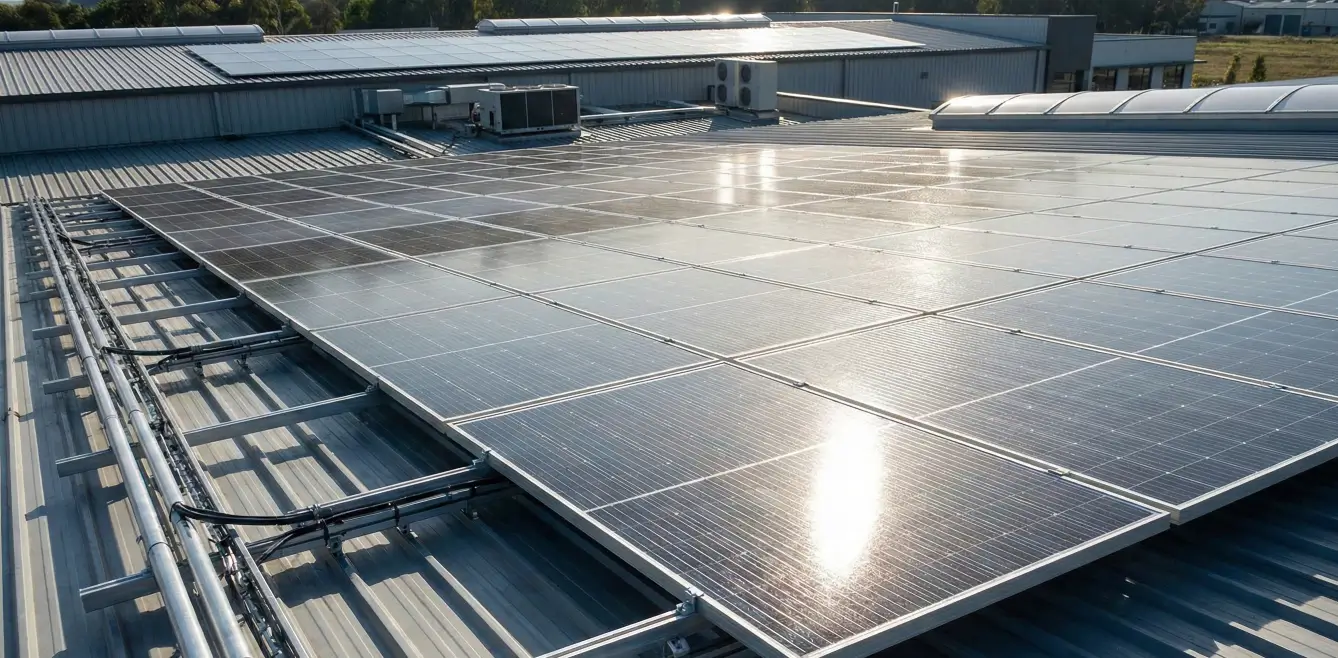
Every business operates in a different way and uses electricity differently. Because of this, choosing a solar power system should not focus on technology alone. The decision should reflect business goals, site conditions, and how important a stable electricity supply is to daily operations.
When an On Grid Solar System Makes Sense
For businesses located in areas with a reliable electricity supply from PLN, an On Grid solar system is often the most practical option. This is especially true when the main goal is to reduce monthly electricity costs.
An On Grid system helps businesses lower energy expenses while keeping operations simple. Investment levels remain manageable, and there is no need to manage battery storage. For many companies, this balance makes On Grid systems the preferred choice.
When an Off Grid Solar System Is Required
If a business operates in a location without access to the PLN electricity network, an Off Grid solar system becomes necessary. This type of system provides a fully independent electricity supply.
Off Grid systems are suitable for remote areas, temporary project sites, and specialized facilities outside the national grid. In these cases, the system supports operations where grid electricity is not available.
Focus on Real Operational Needs
In many real world situations, businesses do not need full energy independence. What matters more is selecting a solar power system that matches actual operational needs.
Evaluating electricity usage patterns, power reliability requirements, and long term business plans helps ensure that the chosen system delivers real value. This approach supports efficient investment and long term sustainability.
Common Business Mistakes When Choosing a Solar Power System
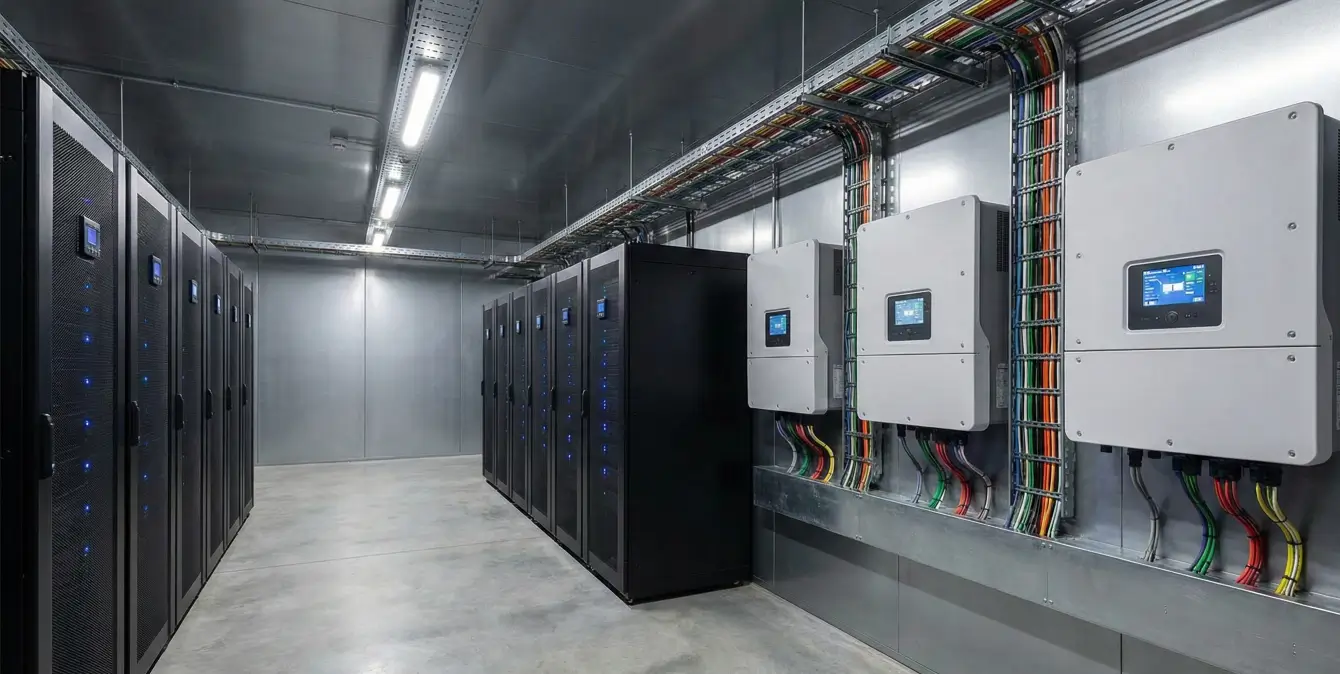
When adopting a solar power system, many businesses move too quickly. They focus only on the technology and overlook the long term impact on operations and costs. These decisions can lead to unnecessary expenses or operational problems.
Below are some of the most common mistakes.
Not Analyzing Electricity Load Profiles in Detail
One frequent mistake is failing to analyze electricity usage in depth. Daily consumption levels, peak demand periods, and operational power needs all affect system design.
Without this data, a solar power system may be poorly sized. An oversized system increases investment costs with little added benefit. An undersized system may not support operations effectively. Clear understanding of electricity usage helps ensure meaningful cost savings.
Making Decisions Without a Feasibility Study
Another common issue is installing a solar power system without a proper feasibility study. Without technical and financial analysis, businesses may miss opportunities to improve system performance and reduce costs.
A feasibility study evaluates site conditions, electricity consumption, system design, and expected financial returns. It helps ensure that the solar power system aligns with business needs, budget limits, and efficiency goals.
The Importance of Needs Analysis Before Installing a Solar Power System
Every business has a unique electricity consumption pattern. Operating hours, peak load demand, and dependence on stable power all influence daily energy use. Because of this, a solar power system cannot follow a one size fits all approach.
Why Data Matters More Than Assumptions
The best way to choose a solar power system is to rely on data. A proper needs analysis begins with reviewing historical electricity bills. It also includes understanding energy use during working hours and peak demand periods.
Businesses should assess how sensitive operations are to power disruptions. Identifying critical equipment and processes helps define reliability requirements.
Long Term Value Through Proper Planning
With a detailed needs analysis, businesses can design a solar power system that fits operational needs. This approach avoids unnecessary investment in oversized systems and ensures essential operations receive reliable power.
In the long term, needs analysis supports cost efficiency and operational continuity. Instead of simply installing solar panels, businesses gain an energy solution that supports growth, stability, and long term strategy.
FAQ
Can an On Grid solar power system operate during a PLN power outage
In most cases, an On Grid solar power system does not supply electricity during a power outage from PLN. This happens because of grid safety rules. When the grid goes down, the solar system shuts off automatically.
This safety feature prevents electricity from flowing back into the grid. It helps protect maintenance workers and keeps the electricity network stable.
Why is an Off Grid solar power system more expensive
An Off Grid solar power system depends on batteries as its main source of electricity. Batteries increase the initial investment cost. They also require regular maintenance and replacement over time.
These additional costs make Off Grid systems more expensive than systems that use grid electricity as support.
Is an Off Grid solar power system suitable for small businesses
In most cases, small businesses with stable access to PLN electricity do not need an Off Grid solar system. These systems are more suitable for businesses in remote locations or areas without access to the national grid.
For urban and suburban businesses, simpler solar system options are usually more cost efficient and easier to manage.
Does an On Grid solar power system still provide savings during cloudy weather
Yes, an On Grid solar power system still generates electricity during cloudy weather. Output is lower than on sunny days, but the system continues to supply part of the electricity demand.
This reduces the amount of electricity drawn from the grid and helps lower overall electricity costs.
When should a business consider a Hybrid solar power system
A business should consider a Hybrid solar power system when uninterrupted electricity is critical. This includes production facilities, cold storage operations, digital services, and businesses that operate continuously.
A Hybrid system provides backup power and reduces reliance on the PLN grid. This helps maintain stable operations during power disruptions.
Share